


The Current State and Application of Self-Service Cashier Kiosks in U.S. Casinos
Introduction
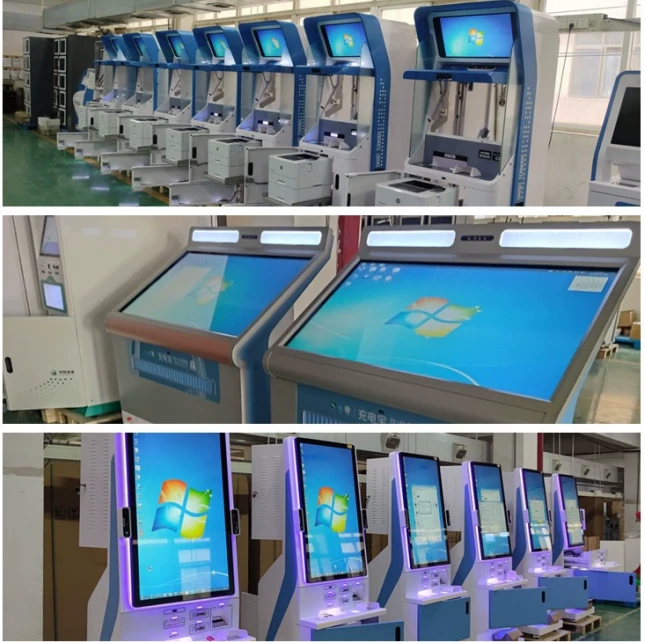
In recent years, the U.S. casino industry has been rapidly evolving with digital transformation, and the widespread adoption of self-service cashier kiosks has significantly improved operational efficiency and customer experience. These kiosks allow players to independently exchange cash for chips, redeem TITO (Ticket-In/Ticket-Out) vouchers, and check account balances, reducing reliance on traditional cashier counters. This article explores the current application, technological features, advantages, challenges, and future trends of self-service kiosks in U.S. casinos.
1. Prevalence of Self-Service Kiosks
Self-service cashier kiosks have become a standard feature in U.S. casinos, particularly in large casino resorts and regional gaming establishments. According to data from the American Gaming Association (AGA):
Over 90% of commercial casinos have deployed self-service kiosks, a 50% increase since 2018.
Nearly all major gaming markets, including Las Vegas, Atlantic City, and tribal casinos, have adopted this technology.
Smaller casinos and racetracks are gradually introducing kiosks to reduce labor costs and enhance service efficiency.
These kiosks are typically located in casino floors, high-limit gaming areas, entrances, and hotel lobbies, ensuring players can conduct transactions at any time.
2. Key Functions of Self-Service Kiosks
Modern self-service kiosks have evolved from simple cash-to-chip converters into multifunctional financial stations, offering:
(1) Cash-to-Chip Conversion
Accepts U.S. bills ($1-$100) and dispenses chips of various denominations.
Some kiosks support high-value transactions (e.g., over $1,000) but require additional identity verification.
(2) TITO Voucher Redemption
Players can insert slot machine or electronic table game vouchers (similar to receipts) to redeem cash.
This technology reduces physical chip handling, improving hygiene (a key consideration post-COVID-19).
(3) Player Account Management
Check loyalty program balances (e.g., MGM Rewards, Caesars Rewards) and promotions.
Some kiosks allow login via membership cards or mobile apps for cashless transactions.
(4) Anti-Fraud & Compliance Features
Detects counterfeit bills and fake vouchers.
Triggers KYC (Know Your Customer) checks for high-value transactions (e.g., >$3,000) to comply with AML (Anti-Money Laundering) regulations.
3. Technology-Driven User Experience Enhancements
Self-service kiosks incorporate advanced technologies to improve speed, security, and convenience:
(1) Biometric Authentication
High-end casinos (e.g., Wynn, The Venetian) use fingerprint or facial recognition instead of membership cards to reduce fraud.
(2) AI & Machine Learning
Analyzes player behavior to flag suspicious transactions (e.g., rapid large withdrawals) and alerts compliance teams.
(3) Mobile Payment Integration
Some kiosks support Apple Pay, Google Pay, and Venmo, catering to younger players.
(4) Multilingual Support
Offers Spanish, Chinese, French, and other languages to accommodate international visitors.
4. Advantages and Challenges
(1) Advantages
✅ Faster Transactions: Traditional cashier exchanges take ~3 minutes, while kiosks complete them in 30-60 seconds.
✅ 24/7 Availability: Operates beyond staffed counter hours, meeting late-night player demand.
✅ Lower Labor Costs: Reduces the need for cashiers, optimizing workforce allocation.
✅ Improved Hygiene: Minimizes person-to-person contact, aligning with post-pandemic health standards.
(2) Challenges
❌ Technical Failures: Bill jams or system crashes can disrupt player experience.
❌ AML Compliance Pressure: Must adhere to FinCEN (Financial Crimes Enforcement Network) regulations.
❌ Older Player Adaptation: Some traditional gamblers still prefer human cashiers, requiring guidance.
5. Future Trends
(1) Cashless Casino Expansion
More casinos may adopt digital wallets + self-service kiosks to reduce cash usage.
(2) Cryptocurrency Integration
Some casinos (e.g., The D Las Vegas) are piloting Bitcoin-compatible kiosks, which may become mainstream.
(3) AI-Powered Personalization
Kiosks may use data analytics to recommend promotions or games, boosting engagement.
(4) Stricter Regulatory Compliance
Governments may enforce real-time transaction monitoring and detailed record-keeping.
Conclusion
Self-service cashier kiosks have become a cornerstone of U.S. casinos, enhancing efficiency, cutting costs, and improving customer satisfaction. Moving forward, advancements in cashless payments, biometrics, and AI will drive smarter, more secure kiosk solutions. However, casinos must balance innovation with regulatory compliance to ensure sustainable growth.